Understanding How Roofing Systems are Designed — and Why it Matters
Homeowners and business owners often assume that all roofing systems are essentially the same, just scaled up or down depending on the building. In reality, residential and commercial roofing systems are designed very differently, with distinct materials, lifespans, maintenance requirements, and performance expectations.
Hired Guns Roofing & Restoration, a trusted roofing contractor in Conroe TX, frequently answers this question for property owners who are trying to understand why commercial roofs last longer, why residential roofs wear out faster, and what that means for long-term planning. Knowing the difference between these systems helps property owners make better decisions about maintenance, repairs, and replacements.
This guide breaks down the key differences between residential and commercial roofing systems, explains why lifespan varies, and clarifies what property owners should expect from each.
The Core Difference Between Residential and Commercial Roofing Systems
The biggest difference between residential and commercial roofing systems comes down to design purpose. Residential roofs are engineered for aesthetics, moderate durability, and cost efficiency, while commercial roofs are built for long-term performance, accessibility, and durability.
Residential roofing systems are typically sloped and designed to shed water quickly. Commercial roofing systems are often flat or low-slope and engineered to withstand constant exposure to the elements while remaining serviceable over decades.
A professional roofing contractor evaluates each system based on its intended use, climate exposure, and maintenance expectations rather than treating all roofs the same.
Residential Roofing Systems: Built for Homes, Not Longevity
Residential roofs are designed to protect single-family homes while balancing appearance and affordability. In Texas, residential roofing systems face intense sun exposure, heat, wind, and storms that significantly shorten their lifespan.
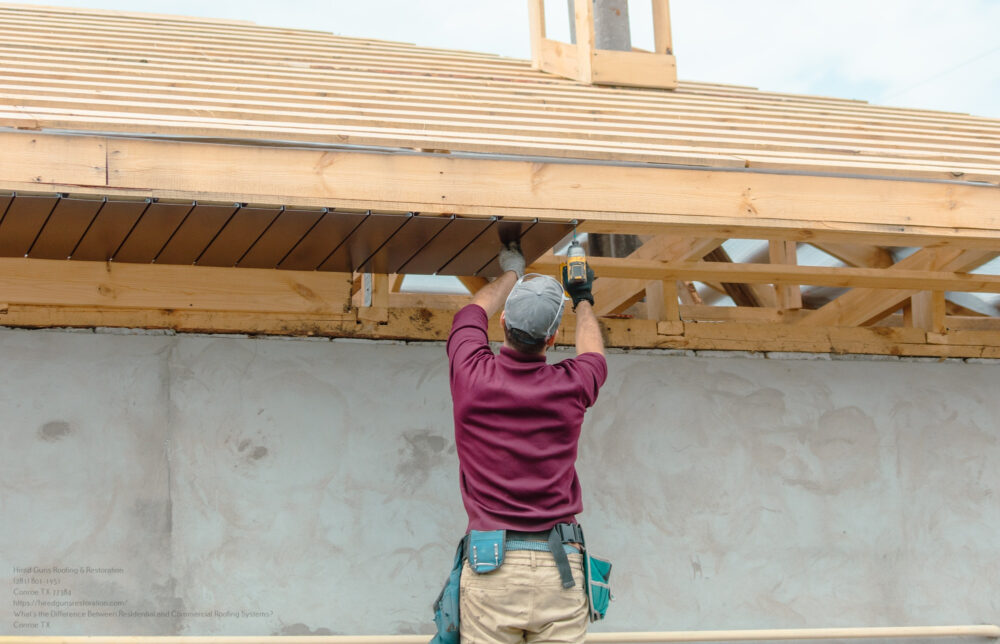
Most residential roofs in this region are built using asphalt shingles, which typically last 15 to 25 years depending on ventilation, maintenance, and weather exposure. Even with proper care, residential roofs are expected to wear out faster than commercial systems.
Because these systems are not designed for frequent foot traffic or ongoing service access, maintenance and inspections must be done carefully to avoid additional wear.
Read more about roofing contractor in Conroe TX
Looking For Commercial or Residential Roofing Services?
Contact Hired Guns Roofing & Restoration today for reliable roofing services.
Commercial Roofing Systems: Engineered for Long-Term Performance
Commercial roofing systems are built with durability as the primary goal. When properly installed and maintained, many commercial roofs can last 40 to 50 years, far exceeding the lifespan of residential systems.
These roofs often use materials such as TPO, EPDM, PVC, or metal, which are designed to handle prolonged UV exposure, standing water, and frequent inspections. Commercial roofs are also built to support maintenance access, equipment installation, and regular service without compromising performance.
A qualified roofing contractor understands how these systems function as part of a larger building envelope and why preventative maintenance plays such a critical role in their longevity.
Why Climate Impacts Residential and Commercial Roofs Differently
In Texas, climate plays a major role in how quickly roofing systems age. Residential roofs are more vulnerable to heat-related deterioration because asphalt shingles absorb and retain heat, accelerating breakdown.
Commercial roofing materials are engineered to reflect heat, improve energy efficiency, and withstand prolonged exposure to extreme temperatures. This difference in material performance is one of the reasons commercial roofs often outlast residential roofs by decades.
Understanding climate-specific impacts allows property owners to plan maintenance schedules and replacement timelines more accurately.
Maintenance Expectations for Each Roofing System
Residential roofs typically require visual inspections, minor repairs, and occasional maintenance to address storm damage or wear. Because these roofs are not designed for routine foot traffic, inspections must be handled carefully.
Commercial roofs, on the other hand, are built with ongoing maintenance in mind. Regular inspections, drainage checks, and minor repairs are expected and encouraged. This proactive approach significantly extends the life of commercial roofing systems.
A professional roofing contractor can develop a maintenance plan tailored to either system, ensuring performance and longevity are maximized.
Cost vs. Value Over Time
While commercial roofing systems generally have higher upfront costs, their long lifespan and lower replacement frequency often make them more cost-effective over time. Residential roofs may cost less initially but require replacement much sooner.
This difference is important for property owners who are evaluating long-term investment value rather than just immediate expense. Choosing the right roofing system for the property type ensures expectations align with performance.
Repairability and Replacement Considerations
Residential roofing systems are often repaired when damage is limited and the roof is relatively young. However, once a residential roof reaches the latter half of its lifespan, replacement often becomes the more practical option.
Commercial roofs are frequently repaired and maintained throughout their lifespan, with replacements occurring far less often. This repair-first approach is possible because commercial systems are designed to be serviced.
Working with an experienced roofing contractor ensures property owners receive honest guidance on whether repairs or replacement make the most sense for their system.
Choosing the Right Roofing Contractor for Your Property
Whether residential or commercial, roofing systems require specialized knowledge. Not all contractors are equipped to handle both systems properly.
Hired Guns Roofing & Restoration brings experience across both residential and commercial roofing, helping homeowners and business owners understand the differences and make informed decisions. Their team prioritizes system-specific solutions, long-term performance, and transparent communication.
Conclusion
So, what’s the difference between residential and commercial roofing systems? In short, residential roofs are designed to wear out sooner, while commercial roofing systems are built for long-term durability and serviceability. Understanding these differences helps property owners plan maintenance, manage expectations, and protect their investment. If you’re unsure which system applies to your property or need professional guidance, contact Hired Guns Roofing & Restoration, a trusted roofing contractor in Conroe TX, to schedule an inspection or consultation today.
roofing contractor near me in Conroe TX
Looking For Commercial or Residential Roofing Services?
Contact Hired Guns Roofing & Restoration today for reliable roofing services.